Blocked Drains Wantirna
Gully overflowing, shower draining slowly or the toilet gurgling every time the washing machine empties? We clear blocked drains across Wantirna and show you on camera what caused the problem. Ring 03 9069 5874.
- Licensed and insured
- Local to Wantirna 3152
- Quote agreed first
- After-hours call-outs
Signs your drain is blocking
Drains rarely block all at once. Most give you weeks of warnings before they overflow. Look out for:
- Water rising in the shower or bath when the toilet is flushed or the washing machine empties.
- Gurgling sounds from the basin, bath or floor waste as other fixtures drain.
- A slow kitchen sink even after you have cleaned the strainer.
- Bad smells around the outdoor gully, floor wastes or the toilet.
- Water pooling around the overflow gully in the garden, or the grate lifting.
- Lush green patches in the lawn along the line of the sewer, a sign that a cracked pipe is feeding the grass.
- Toilet water level rising higher than usual before slowly draining away.
If you notice one of these, a drain is partly blocked and it will get worse. Clearing it early is quicker and avoids an overflow at the worst possible time. Our guide to blocked drain warning signs covers what each symptom usually means.
Why drains block in Wantirna
Wantirna grew fast through the 1970s and early 1980s, as orchards and farmland between Boronia Road and the Dandenong Creek were subdivided into family housing. The house drains laid during that boom were mostly vitrified clay pipe, made in short lengths and joined with a socket and a ring or mortar seal. Clay itself lasts a very long time, but the joints are its weak point.
The soils in much of Wantirna are reactive clays. They swell when they are wet and shrink when they dry, and over forty or fifty winters and summers that movement shifts pipe joints apart, cracks collars and in places causes sections of pipe to sag. Any gap is an invitation for roots.
And there are plenty of roots. Wantirna is a leafy suburb, with established liquidambars, gums, elms, ash and fruit trees in front and back yards, as well as street trees along the nature strips. Roots follow moisture and nutrients, find their way through a joint the width of a hair and then grow into a dense mat inside the pipe. That mat catches paper, wipes and fat until the drain chokes. Our guide on liquidambar roots and sewers explains why some trees cause more trouble than others.
Other common causes we clear in Wantirna homes include:
- Wipes and sanitary products. Even products labelled flushable do not break down like toilet paper and build up at joints and bends.
- Cooking fat and oil. Poured down the sink warm, it cools and sets on the pipe wall, narrowing the pipe and trapping food scraps.
- Hair and soap scum in shower, bath and basin wastes.
- Silt, leaves and garden debris in stormwater drains and pits.
- Foreign objects such as children's toys, cotton buds and dental floss.
- Collapsed or broken pipe, often where a driveway, extension or tree has put weight or pressure on an old line.
- Poor falls in older lines or later renovations, where the pipe does not slope enough for waste to carry away.
How we clear blocked drains
Finding the blockage
First we work out which line is blocked and where. The pattern of which fixtures are affected tells us a lot. If only the kitchen sink is slow, the blockage is probably in that branch. If the outdoor gully is overflowing and every fixture is slow, the blockage is in the main house drain somewhere between the gully and the sewer connection. We locate the inspection openings, which in many Wantirna homes are near the back or side boundary, sometimes buried under garden beds or paving.
Electric drain machine
For many household blockages, especially roots and paper in smaller pipes, we use an electric drain machine. It feeds a rotating steel cable with a cutting head into the pipe, breaking through the blockage and cutting roots back to the pipe wall. It is effective for getting water moving quickly.
High-pressure water jetting
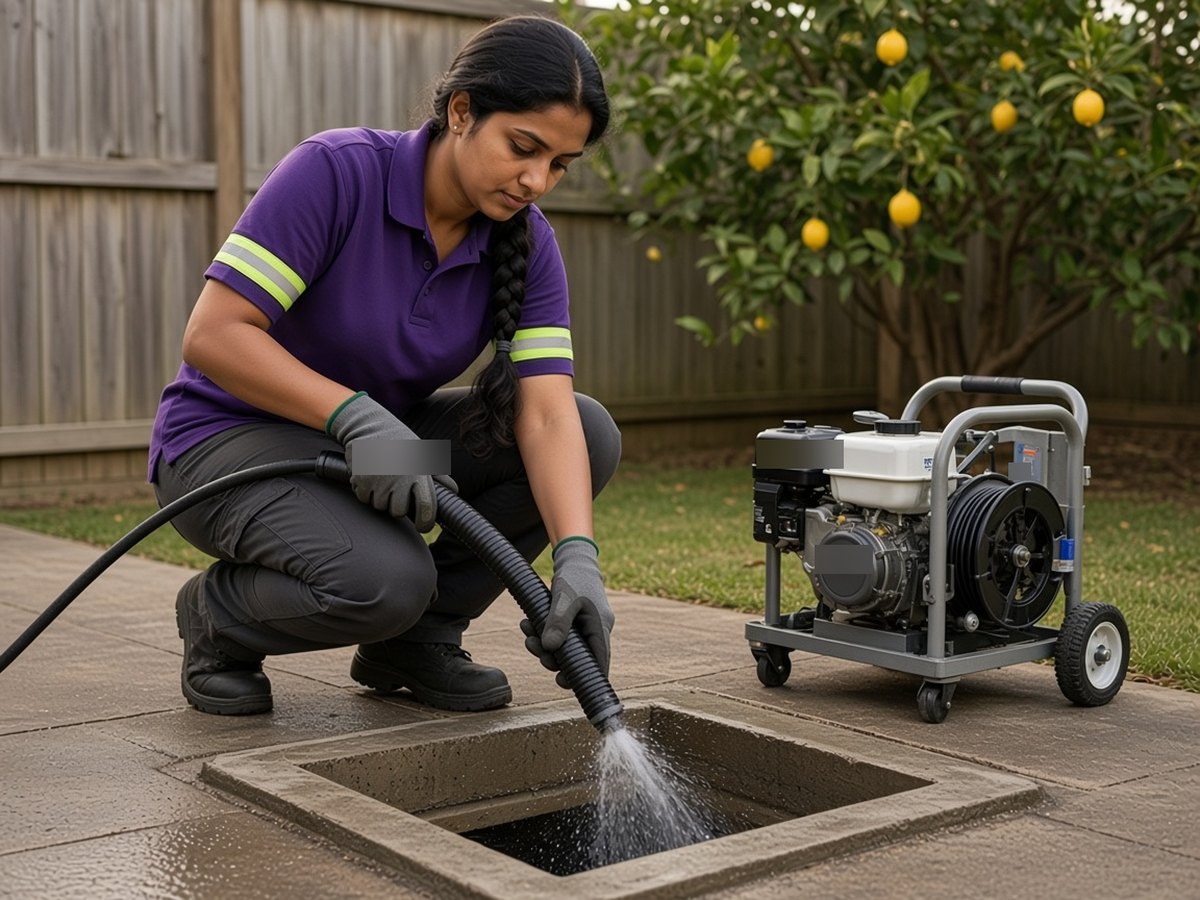
For heavy root growth, fat build-up and long runs of pipe, we use a high-pressure jetter. A specialised hose and nozzle feed water at high pressure through the pipe. Rear-facing jets drive the hose forward and scour the pipe walls clean, flushing roots, fat, sludge and debris downstream to the sewer. Jetting cleans the full diameter of the pipe rather than just punching a hole through the blockage, so the drain flows better for longer.
Camera inspection
Once the drain is clear, we can feed a waterproof camera through the line. The live picture shows exactly what caused the blockage: root intrusion at a joint, a cracked or displaced section, a sag where water sits, or a collapse. We show you the footage on the monitor and can give you a recording. The camera head also has a locator, so we can mark on the ground the exact position and depth of any damage.
That inspection is what lets us give you an honest recommendation. If the pipe is sound and the blockage was a one-off, clearing it is all you need. If roots are coming through a cracked joint, they will grow back and you need to decide whether to maintain the drain with regular clearing or fix the pipe properly.
How do you unblock a badly blocked drain?
A badly blocked drain, where water is backing up or sewage is overflowing, needs mechanical clearing. Plungers and drain cleaning products will not shift a root mass or a long build-up of fat in a sewer. A plumber will locate the nearest inspection opening downstream, then use an electric eel to cut through the blockage or a high-pressure jetter to blast it clear. Jetting is generally best for root and fat blockages because it cleans the full pipe wall. A camera inspection afterwards confirms the drain is clear and shows whether the pipe is damaged.
Why shouldn't you use baking soda and vinegar to unclog a drain?
The fizzing reaction looks impressive but has very little cleaning power. Baking soda and vinegar mostly neutralise each other into salty water and carbon dioxide, which can loosen a little soap scum near the plughole but will not move hair clogs, fat deposits or roots further down the pipe. Pouring large amounts in a blocked drain can also leave a sink full of standing water. It is harmless to try on a slow basin, but if the drain is properly blocked, it is wasting time. Caustic chemical cleaners carry their own risks to you and to older pipes, so we do not recommend them either.
Clearing versus fixing: your options
After a blockage is cleared and inspected, there are generally three paths:
- Leave it. If the pipe is in good condition and the blockage was caused by something like wipes, there is nothing more to do, other than change the habit that caused it.
- Maintain it. If roots are entering through a joint but the pipe is otherwise sound, regular jetting, often once a year before winter, can keep the drain flowing. It is the lower upfront option, but the roots will return.
- Repair it. If the pipe is cracked, displaced or collapsed, a permanent fix is either excavation and replacement of the damaged section with PVC, or pipe relining, which installs a new resin pipe inside the old one without digging up the garden, driveway or paving. Our drain camera and pipe relining page explains how relining works.
We explain the pros and cons of each in your situation and give you the price for each option, so you can decide what suits your property and budget.
What is the average cost of unblocking a drain?
There is no honest single figure, so we do not publish one. A blocked basin cleared at the trap takes a fraction of the time and equipment of a root-choked sewer that needs jetting and a camera inspection. Access matters too: an inspection opening buried under paving is slower to reach than one in the lawn. When you ring we ask about the symptoms so we can explain what is likely to be involved, and we confirm the price on site before anything starts.
Sewer drains: who is responsible?
In Victoria, the property owner is responsible for the private sewer drain on their land, from the fixtures in the house down to the point where it connects to the water corporation's sewer branch or main. The water corporation is responsible for the main and, in most cases, the connection branch. If a blockage is in the main, for example when several houses in the street are affected, your water retailer should be contacted. Our camera inspection shows where a blockage is, so we can tell you if it is on the public side.
In some Wantirna streets the sewer main runs along the back boundary rather than the street, through an easement. That means your private drain might run under the full length of the back yard before reaching it, and roots from neighbouring trees can affect it as well.
Stormwater drains
Stormwater and sewer are separate systems. Your stormwater drains carry rainwater from the roof, through the downpipes and into the street gutter or a council drain. When they block, water overflows from downpipe connections, pools against the house or floods the garage. Common causes are leaves and silt washed off the roof, roots, and pipes crushed by vehicles or tree growth. We clear stormwater drains by jetting and use the camera to find breaks. See stormwater drainage.
How can I unblock a stormwater drain myself?
Start at the easy end. Clean the gutters and the leaf guard at the top of each downpipe, then lift the grate on any pits and scoop out the leaves and silt. If a downpipe connects to the stormwater line with a removable inspection cap, you can try flushing it from the top with a garden hose. If the water still backs up, the blockage is in the underground line and needs a drain machine or jetter. Avoid pushing rods or tape down blindly, as they can get stuck or damage old pipe.
Kitchen, bathroom and laundry drains
Not every blockage is in the main drain. Kitchen sinks block with fat and food scraps, basins and showers with hair and soap, and laundry tubs with lint and sand from work clothes. For these we usually clear the waste at the fixture, by removing and cleaning the trap or using a small hand-held drain machine. If the blockage is further along, in the branch drain under the floor or slab, we move to the next inspection point. Our blocked toilets and sinks page has more detail.
Preventing blocked drains
Most blockages we clear in Wantirna could have been delayed or avoided:
- Only flush toilet paper. Put wipes, cotton buds, sanitary products and dental floss in the bin, even if the packaging says flushable.
- Keep fat out of the sink. Let it cool, wipe it out with paper towel and put it in the bin. Our guide on what not to pour down the kitchen sink lists the worst offenders.
- Use strainers in the kitchen sink, shower and laundry tub.
- Think before planting. Keep thirsty trees with aggressive roots well away from the sewer line. Unsure of the route? Our camera locator can trace it.
- Book a maintenance jet if you know roots are present, ideally before winter when growth and rain make blockages more likely.
- Keep inspection openings accessible. Do not pave or concrete over them; a buried opening makes every future visit slower.
Blocked drains in nearby suburbs
As well as Wantirna 3152, we clear blocked drains in Wantirna South, Bayswater, Boronia, Vermont South, Vermont, Knoxfield, Scoresby and Heathmont. For an overflow now, see our emergency plumber page or ring 03 9069 5874.
What comes with blocked drains
- Equipment
- Drain camera and locator, high-pressure jetter, electric drain machine, acoustic leak detector, thermal camera, pressure gauges
- Licences
- Victorian plumbing licences for water supply, sanitary, drainage and roofing
- Pricing
- The cause explained and the price agreed before work; written quotes for bigger jobs
- Materials
- WaterMark-certified fittings and products that meet Australian Standards
- Paperwork
- Compliance certificates for regulated work, plus photos for your records or insurer
- Clean-up
- Old parts taken away, the work area cleaned, and the repair tested with you
Blocked Drains in Wantirna: your questions
How do you unblock a badly blocked drain?
With mechanical clearing. A plumber opens the nearest inspection point and uses an electric drain machine to cut through the blockage or a high-pressure jetter to scour the pipe clean. Jetting suits roots and fat best. A camera inspection afterwards confirms the line is clear and shows whether the pipe is damaged.
What is the average cost of unblocking a drain?
It varies with the cause, the location of the blockage and how easy the drain is to reach, so we do not publish a set figure. We explain what is likely to be involved when you call and give you a firm price on site before we start.
Why shouldn't you use baking soda and vinegar to unclog a drain?
The two mostly cancel each other out into salty water and fizz. That may freshen a basin but will not shift hair, fat or roots in a blocked pipe. If water is backing up, you need the blockage physically removed.
How can I unblock a stormwater drain myself?
Clean the gutters and downpipe leaf guards, empty leaves and silt out of the pits, and try flushing from the top of the downpipe with a garden hose. If water still backs up, the blockage is underground and needs a drain machine or jetter.
Who is responsible for blocked sewer drains in Australia?
In Victoria, the owner is responsible for the private drain on their property up to the connection with the water corporation's sewer. The water corporation looks after the main. A camera inspection shows which side the blockage is on.
Will tree roots come back after the drain is cleared?
If they got in through a crack or open joint, yes, usually within months to a couple of years. Regular jetting can manage them, or the pipe can be repaired or relined to seal the entry point for good.
Before you call, read this
Tell us what needs fixing
Tell us about the job and a licensed Wantirna plumber will ring you back. If water is flooding or a sewer is overflowing, do not wait for a reply: call 03 9069 5874 now.
Every job is priced on what we find on the day, so there is no price list here. You will always know the cost before we start.
From your call to a finished repair
Four steps, the same on every job, whether it is a dripping tap or a sewer overflowing at midnight.
- 01You call or send the form
Say what is going on and roughly where on the property. If you can, snap a photo of the leak, the tap or the label on the hot water unit so the right parts come in the ute.
- 02We find the cause
On site we trace the fault, show you what we found and explain the options. You get the price before any fitting is undone.
- 03The repair, tested
Work is done to the Plumbing Regulations and Australian Standards, then run and tested while you watch. Regulated jobs come with a compliance certificate.
- 04Tidy finish and a follow-up
Old parts go in the ute, the work area is wiped down, and we check in a few days later to make sure everything is still dry and working.
Other plumbing jobs we take on in Wantirna
Where we work around Wantirna
Home base is Wantirna, between the Dandenong Creek parklands and Knox City. From here it is a short run to Wantirna South over High Street Road and Scoresby beyond it, Bayswater and Boronia to the east, Vermont South and Vermont over the Whitehorse line, Knoxfield down Stud Road and Heathmont across the creek to the north. Not on the list? Ring 03 9069 5874 and ask.
Need a plumber in Wantirna?
A licensed local plumber picks up, and the cost is settled before any tools come out.